Chapter 1 (Hindi)
3. DBMS Architecture – Three Levels
DBMS Architecture – Three Levels
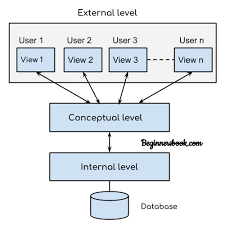
A Database Management System (DBMS) uses a three-level architecture to separate how data is stored, how it is structured, and how users see it. This makes the system flexible, secure, and user-friendly.
1️⃣ External Level (User View)
- This is the highest level of abstraction.
- It defines how individual users see the data.
- Each user gets a customized view depending on their role.
- Example: An accountant may only see salary details, while an HR manager sees employee records.
2️⃣ Conceptual Level (Logical View)
- This is the middle level.
- It describes the entire database structure logically.
- Defines tables, relationships, and constraints.
- It is common for all users and hides physical storage details.
- Example: A schema showing tables like Students, Courses, and their relationships.
3️⃣ Internal Level (Physical Storage View)
- This is the lowest level.
- It explains how data is physically stored in memory or disk.
- Includes storage methods, indexing, and access paths.
Example: Data stored as files, blocks, or records on disk.