Chapter 2 (Hindi)
8. Condition
Operating System Tutorial
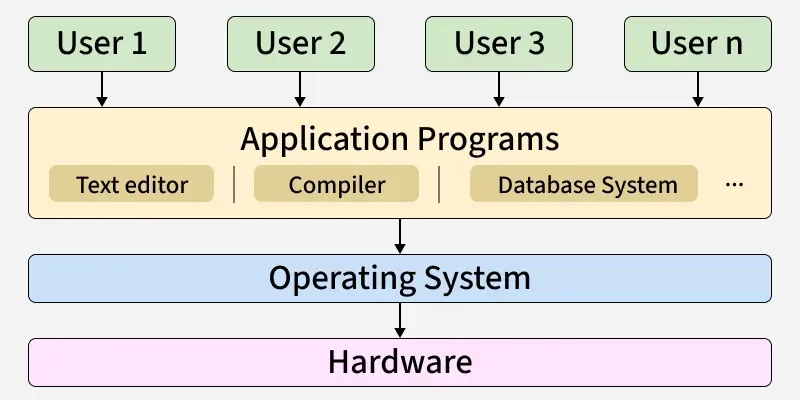
Operating System (OS) एक software होता है जो computer के hardware और software resources को manage और handle करता है।
- Computer के resources जैसे CPU, memory, files को manage करता है
- User और hardware के बीच interface का काम करता है
- Core functions जैसे process management, memory management, file management perform करता है
- System resources को government के अलग-अलग departments की तरह organize करता है
Examples (उदाहरण):
Linux, Unix, Windows 11, MS-DOS, Android, macOS, iOS
Basics (मूल बातें)
यह section Operating System के basic concepts को introduce करता है।
- Introduction (परिचय)
- Types of OS (OS के प्रकार)
- Kernel in OS (OS में kernel)
- System Call (system call)
- System Initialization (system initialization)
Process Scheduling (प्रोसेस शेड्यूलिंग)
यह section process management और scheduling पर focus करता है।
- Process Introduction (प्रोसेस परिचय)
- Process Control Block (PCB)
- Process Table (प्रोसेस टेबल)
- Process Management Introduction (प्रोसेस मैनेजमेंट)
- Process States (प्रोसेस की अवस्थाएं)
- Process Scheduler (प्रोसेस scheduler)
- CPU Scheduling Algorithms (CPU scheduling algorithms)
- Preemptive vs Non-Preemptive
- Dispatcher vs Scheduler
- Starvation and Aging
- Quiz: CPU Scheduling
Process Synchronization (प्रोसेस सिंक्रोनाइजेशन)
यह section synchronization और IPC concepts को cover करता है।
- Inter Process Communication (IPC)
- Process Synchronization
- Race Condition
- Critical Section
- Solutions to Synchronization Problems
- Peterson’s Algorithm
- Dekker’s Algorithm
- Bakery Algorithm
- Hardware Based Solutions
- Semaphores
- Mutex vs Semaphore
- Monitors
- Priority Inversion
- Classical IPC Problems
- Quiz: Process Synchronization
Deadlock (डेडलॉक)
यह section OS में deadlock को explain करता है।
- Introduction (परिचय)
- Deadlock Handling
- Deadlock Prevention
- Banker’s Algorithm (Deadlock Avoidance)
- Detection and Recovery
- Starvation और Livelock
- Resource Allocation Graph (RAG)
- Methods of Resource Allocation
- Deadlock-free condition program
- Quiz: Deadlock
Multithreading (मल्टीथ्रेडिंग)
यह section multithreading concepts को समझाता है।
- Thread in Operating System
- User Level vs Kernel Level Threads
- Process-based vs Thread-based Multitasking
- Multithreading Models
- Benefits of Multithreading
- Quiz: Multithreading
Memory Management (मेमोरी मैनेजमेंट)
1. Basics (मूल बातें)
- Memory introduction और units
- Memory Management in OS
- Logical vs Physical Address
2. Contiguous Allocation
- Implementation of Contiguous Memory
- Internal Fragmentation
- External Fragmentation
- Next Fit Algorithm
- Buddy System
3. Non-Contiguous Allocation
- Paging
- Page Table Entries
- Segmentation
- Segmentation with Paging
4. Advanced Concepts
- Overlays
- Virtual Memory
- Demand Paging
- Page Fault Handling
- Swap Space
5. Page Replacement & Thrashing
- Page Replacement Algorithms
- Belady’s Anomaly
- Second Chance Algorithm
- Thrashing Handling Techniques
- Working Set
6. Kernel & System Concepts
- Kernel Memory Allocation
- Memory Interleaving
- Virtualization
- Quiz: Memory Management
Disk Management (डिस्क मैनेजमेंट)
यह section disk और file management को explain करता है।
- File Systems
- Unix File System
- File Directory & Path Name
- Directory Structure
- File Allocation Methods
- File Access Methods
- Secondary Memory
- Hard Disk Drive
- Disk Scheduling Algorithms
- SSTF Algorithm Program
- Spooling क्या है
- Spooling vs Buffering
- Free Space Management
- Quiz: Input Output Systems